1 800 741 5985
When two U.S.-based perfusionists, Kathleen Ramos and Hunar Rao, packed their bags for Göttingen, Germany, they knew they were stepping into more than just a professional exchange. They were embarking on an experience that would blend medicine, culture, and personal growth in ways neither could have fully anticipated.
For Kathleen, who had spent much of her career practicing in Austin, Texas, the opportunity to work in Germany was both professional and personal. After recent travel assignments in Denver and Orlando, she was eager to see how perfusion was practiced in Europe and to explore a country that she had never visited. Hunar’s path was a little different, having visited Germany the year prior and falling in love with its energy, appreciated an opportunity to return when an email about the exchange appeared in his inbox.
Inside the operating rooms, both perfusionists observed intriguing differences in how cardiopulmonary bypass (CPB) was conducted.
Kathleen noticed that normothermic temperatures were used routinely, and that cardioplegia preparation was often managed by perfusionists themselves rather than pharmacy staff. The tubing packs featured built-in bridges that allowed recirculation, when necessary, a thoughtful design that stood out to her.
Hunar, meanwhile, saw a higher frequency of minimally invasive procedures such as minimitral valve replacements, requiring femoral cannulation. He was also introduced to alternate cardioplegia solutions such as Buckberg. Hunar found that the German perfusionists utilized Spectrum pumps, machines he likened to “working with a Tesla, essentially a giant iPad.”
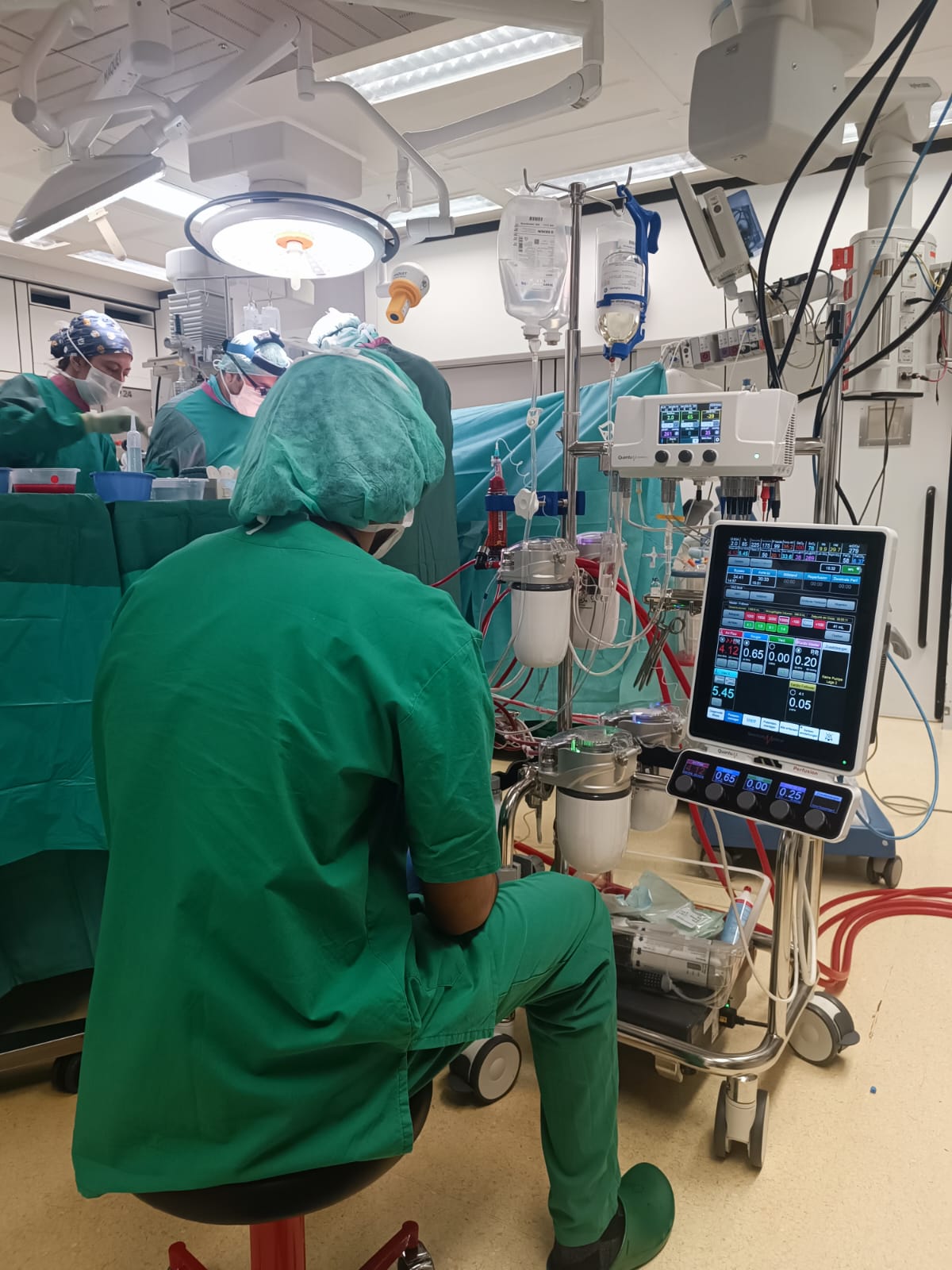
Both Kathleen and Hunar were impressed by the German centers’ adoption of advanced technologies. Kathleen highlighted the convenience of Gem 5000 blood gas machines in every room and the use of automatic charting with modern Spectrum equipment. Hunar, initially unfamiliar with Spectrum pumps, found the challenge of mastering the new heart lung machines exciting. “It was a learning curve,” he admitted, “but thrilling to work with new technology.”
What struck both perfusionists most was the atmosphere of collaboration and camaraderie in the operating room. Kathleen worked alongside a diverse mix of seasoned veterans, new graduates, and students, all of whom were highly skilled and welcoming. In addition, German cardiac surgeons conducted procedures in their native language. Kathleen was supported by her bilingual colleagues and assistants that interpreted when required. Hunar echoed this sentiment: while German was predominantly spoken, colleagues often switched to English, and the team dynamic felt remarkably familiar. “Despite language differences and being in another country,” he reflected, “people are generally the same everywhere.”
One of Kathleen’s most cherished memories was working with Felix, a 70-something perfusionist who had come out of retirement to help the understaffed program. He rode his bike to the hospital twice a week, always pumping a case with clear joy and passion for his craft. Hunar’s highlight came on his very first day, when he assisted in an AngioVac case, a brand-new procedure for the center. “It felt great to be helpful right from the start,” he recalled, laughing at his colleague’s joke that they had “flown in a consultant from the U.S.”
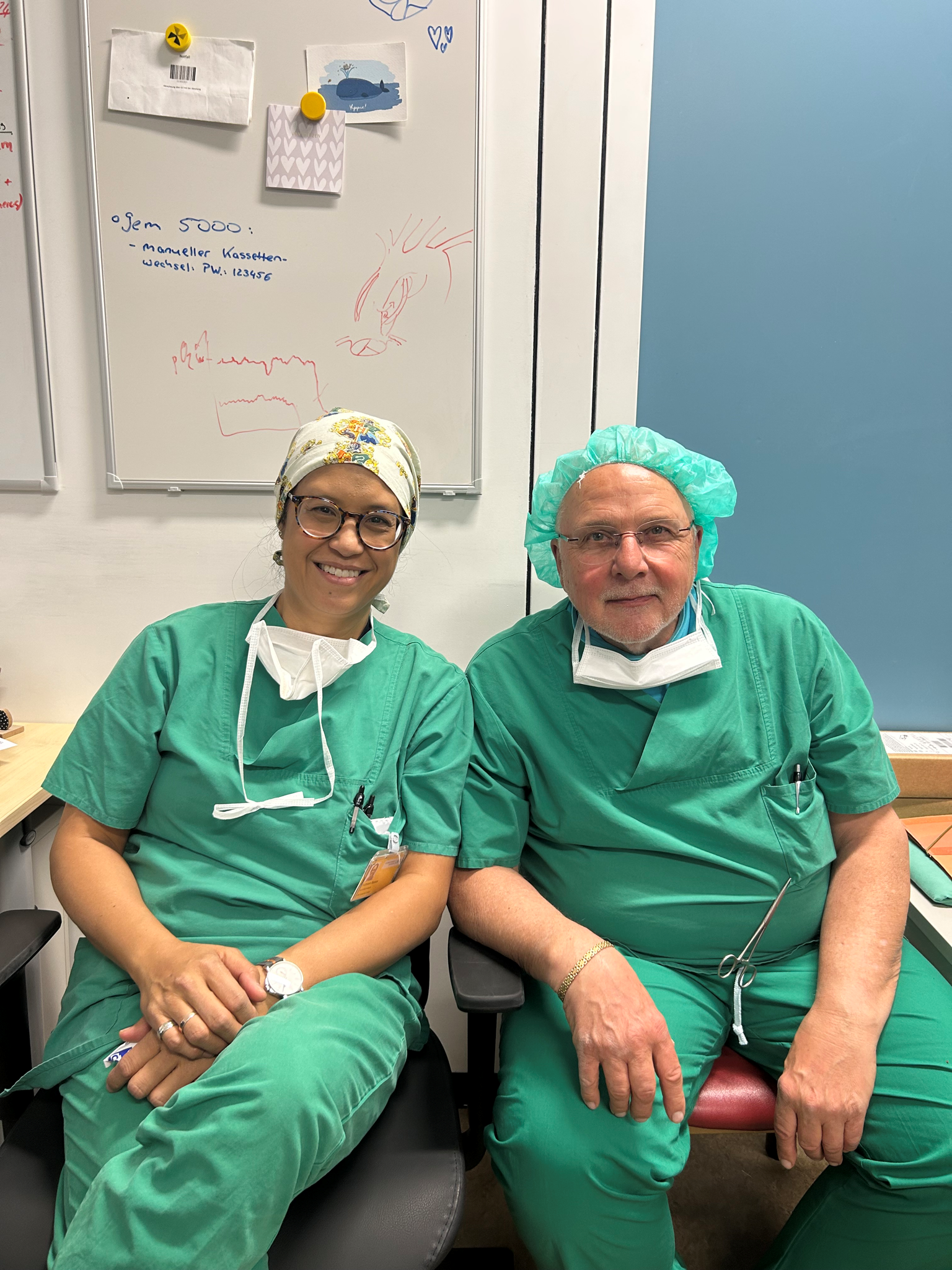
Outside of work, both perfusionists embraced the chance to soak in German culture. Kathleen delighted in strolling Göttingen’s markets, hiking local trails, and taking weekend train trips to Berlin and Amsterdam. Those experiences left a lasting impression, particularly the powerful history of World War II memorials and museums. Hunar’s fondest memories included bonding with colleagues after hours, from celebrating birthdays at a virtual reality arcade to competing in lively foosball matches with locals at an old pub.
Professionally and personally, the exchange reaffirmed the universality of patient care. For Kathleen, the experience highlighted how even abroad, hospitals strive to balance cutting-edge practice with budget-conscious realities. For Hunar, it underscored that despite geographical and cultural differences, the focus on safe, effective patient care unites perfusionists worldwide.
Both perfusionists arrived home changed, grateful for the friendships made, the knowledge gained, and the memories collected. Kathleen expressed deep appreciation for the team in Göttingen, led by chief perfusionist Jacob, and hopes to return someday. Hunar’s takeaway was simpler but no less heartfelt: “Don’t think twice, book your ticket!” he advises fellow perfusionists. And when asked if he’d do it again? His answer was immediate: “Without hesitation.”
Their journey to Germany was made even more impactful through Comprehensive Care Services’ (CCS) recent acquisition of Life Systems, a leading provider of cardio-technical services in Germany. This strategic merger positioned CCS as the world’s largest perfusion provider and marked a significant milestone in expanding global access to high-quality perfusion care. Life Systems, long respected in Germany for its technical excellence and commitment to innovation, now operates as part of the CCS family. The new relationship has enabled in-depth collaboration, training exchanges, and an integrated approach to patient care across continents. For Kathleen and Hunar, the opportunity to visit Germany meant not only working alongside talented professionals, but also witnessing firsthand the synergy of global best practices coming to life in the OR.