1 800 741 5985
By Hannah Givens, CNIM, Regional Director for CNM, Comprehensive Care Services
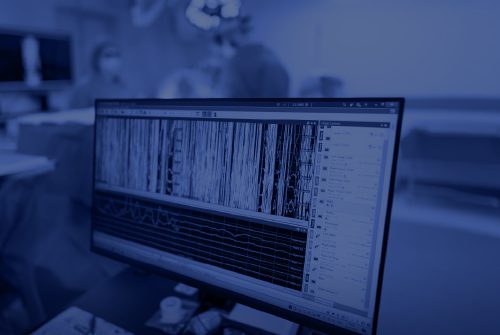
Intraoperative neuromonitoring (IONM) is one of the most critical safeguards in modern surgery. Every day, our job as neuromonitoring professionals is to interpret complex neurological signals in real time and communicate those findings when every second counts. It is a responsibility that requires not just technical skill but composure, critical thinking, and collaboration with the surgical team.
As someone who works in this field and with Comprehensive Care Services (CCS), I have seen firsthand how much intraoperative neuromonitoring has evolved and how vital it is that our training and education evolve alongside it. The future of neuromonitoring will not be defined by equipment advances alone. It will be shaped by the professionals acquiring and interpreting those signals and the knowledge, mentorship, and confidence they bring into the operating room.
Neuromonitoring has grown beyond its traditional focus on spine and brain surgeries. Today, we see it used in orthopedic, vascular, ENT, cardiac, and even transplant procedures. The data we interpret (i.e., EEG, SSEP, MEP, EMG, TOF, etc.) must be understood in the context of anesthesia, surgical manipulation, and each patient’s unique physiology. That complexity requires us to do more than recognize patterns on a screen. We must think critically, communicate clearly, and collaborate seamlessly. Intraoperative neuromonitoring technologists are not just technicians functioning in isolation; we are part of a team protecting the nervous system in real-time. As our field continues to expand, the need for well-trained, well-supported professionals grows right along with it.
One of the biggest challenges I see in our field is the gap between demand and training. There simply are not enough qualified professionals to meet the needs of hospitals and surgical teams across the country. Training programs and credentialing processes have come a long way, but the field is evolving faster than the infrastructure around it.
Many neurophysiologists and technologists come from diverse backgrounds, such as neurodiagnostics, EEG, or neuroscience, and bring valuable perspectives. However, the jump into intraoperative data acquisition and interpretation is a big one from other specialties and disciplines, even within the electroneurodiagnostic space. The OR is a fast-paced, high-stakes environment where theory meets urgency. New professionals need structured education, hands-on experience, and strong mentorship to build the confidence that comes only from seeing and interpreting cases in real-time.
One of the things I value most about working at CCS is not just what we do in the field, but how we invest in future professionals. An excellent example of this is our partnership with Lawrence Technological University (LTU) in Michigan. CCS is proud to be an industry partner for two major educational programs at LTU: the Graduate Certificate in Intraoperative Neuromonitoring (GCIONM) and the Master of Science in Cardiovascular Perfusion (MSCVP).
Here are some specifics about the LTU IONM program and how we at CCS contribute:
- LTU’s GCIONM program launched in Summer 2024. It’s a three-semester, 35-credit program. The first semester is largely classroom & simulation-lab-based; then students complete two semesters of clinical rotations through CCS and other partner hospitals. (Lawrence Technological University)
- CCS contributes simulation labs for LTU students. These labs replicate OR settings and allow students to practice modalities (i.e., EEG, MEP, SSEP, etc.), case handling, and acquiring and understanding signals under realistic conditions before entering live cases. (Lawrence Technological University)
- The LTU IONM program is ABRET-accredited (CNIM Pathway IV), meaning that graduates are well-prepared to sit for the CNIM certification exam. CCS helps by providing clinical mentorship and facilitating exposure to real surgical cases, which is essential for meeting the required case numbers and procedural variety. (Lawrence Technological University)
- Students in the LTU program gain a varied case load: spine, craniotomies, etc., across partner hospitals. CCS ensures students get to observe and participate in a real OR environment under supervision. (michbio.org)
By integrating the LTU GCIONM into CCS’s workspace by providing resources and opportunities, we are helping close the training gap in very concrete ways, such as offering real-world experience, mentorship, and pathways to credentialing that might otherwise be harder to access.
Technology in neuromonitoring is advancing rapidly. We are seeing artificial intelligence, machine learning, and remote monitoring enter the conversation more often than ever. These tools have the potential to enhance accuracy, improve access, and support clinicians, especially in places where experienced neurophysiologists are not always available.
But as exciting as these tools are, they cannot replace the judgment of a trained human professional in the operating room setting. Algorithms can identify patterns, but they cannot understand surgical context, patient history, or communicate with a surgeon while appropriately gauging the pulse and urgency in the middle of a complex case or circumstances. We need to ensure our education keeps pace with and embraces technology, teaching future professionals not just how to use new tools but how to think critically about what those tools are showing us.
At CCS, there is a strong emphasis on that balance of leveraging innovation while preserving the human element and expertise that both defines and distinguishes a superior work product.
If we want the field of neuromonitoring to thrive, we have to invest in the people who make it possible. That means creating clear career pathways, supporting continuing education, and fostering a culture that values learning and work-life balance.
Here’s what a sustainable future looks like to me:
- Standardized education and credentialing so that expectations are consistent across the profession.
- Fair compensation and realistic workloads that prevent burnout and reward expertise
- Ongoing training and case study discussions that keep teams sharp and connected.
- Diversity and inclusion so that the neuromonitoring workforce better reflects the patients we serve.
The LTU programs reflect many of these ideals: well-structured curricula, clear pathways to certification, hands-on experience, and professional mentorship.
Intraoperative neuromonitoring is a unique blend of science, technology, and intuition. Every waveform tells a story, and it is our job to understand what it is saying and to be the advocate for a patient who is unable to speak for themselves.
As I look at where our field is heading, I feel both proud and excited. Proud of the skill, dedication, and collaboration I see every day among my colleagues. Excited about the opportunities to strengthen how we train, mentor, and develop the next generation of neuromonitoring professionals.
Because at the end of the day, patient safety is not just about better machines, it is about better people bettering the lives of other people. And the more we invest in training, education, and mentorship, including partnerships like the one with LTU, the stronger our profession and our impact will become.